

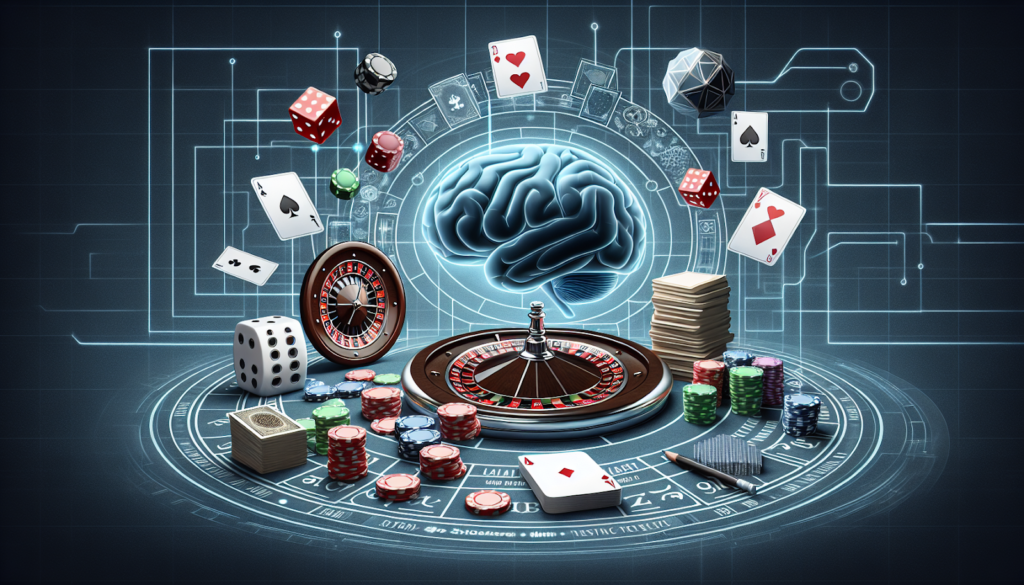
The vibrant lights and thrilling sounds of a casino are not just for ambiance. They are meticulously crafted psychological tools designed to influence player decisions and behavior. Understanding this interplay between environment and psychology is key to maintaining a healthy gaming perspective. For instance, platforms offering attractive incentives, like the Zoome casino bonuses, leverage these principles to enhance engagement. This article delves into the fascinating science behind the screen and the felt, exploring how design, reward systems, and cognitive biases shape the modern player’s journey.
The Numbers Behind the Play
Before we explore the psychological mechanisms, consider these surprising statistics that reveal the scale and nature of player behavior.
- A 2025 industry report projects that over 65% of new casino registrations will be directly influenced by a welcome bonus offer.
- Approximately 92% of slot machine revenue is generated by just 10% of players, highlighting a significant concentration of engagement.
- The global online gambling market is expected to exceed $127.3 billion by 2027, driven largely by mobile accessibility.
- Research indicates that players experience a dopamine release comparable to other rewarding activities within 100 milliseconds of a near-miss on a slot machine.
- In a 2023 study, 78% of players reported that immersive themes and storylines in games increased their session length by an average of 23 minutes.
- The concept of “losses disguised as wins” in modern video slots contributes to a 30% longer average playtime per session.
The Illusion of Control and Near-Miss Effects
Casino games, particularly slots and certain table games, masterfully exploit cognitive biases. The “illusion of control” convinces players that their skill influences a purely random outcome, such as pressing a stop button on a spinning reel. This is amplified by the “near-miss” effect, where a result that is close to a jackpot activates the same brain pathways as an actual win. These psychological triggers encourage continued play by fostering a belief that success is imminent, overriding rational assessment of odds.
Reward Systems and Variable Ratio Reinforcement
The most powerful psychological engine in gaming is the variable ratio reinforcement schedule. Simply put, rewards are delivered after an unpredictable number of responses. This is the core principle behind slot machines and bonus features. Players never know which spin will trigger free games or a large payout. This uncertainty creates a highly addictive behavior pattern, as demonstrated by B.F. Skinner’s operant conditioning experiments. The brain’s anticipation of a potential reward becomes a more compelling driver than the reward itself.
Environmental Design and Sensory Engagement
Casino psychology extends far beyond the game rules. Physical and digital environments are engineered for maximum engagement. The absence of clocks and windows creates a timeless space. Carefully calibrated audio cues, like the celebratory sounds of a win, are broadcast publicly to signal possibility. Even the ergonomics of a chair or the tactile feedback of a screen is designed for comfort during extended play. In online spaces, this translates to seamless navigation, animated bonus rounds, and personalized notification systems that keep the player within the ecosystem.
Bankroll Management as a Cognitive Shield
Understanding these psychological pressures makes practical player strategies essential. Effective bankroll management is the primary cognitive shield against persuasive design. This means predetermining a strict loss limit and viewing any deposited funds as the cost of entertainment, not an investment. Chasing losses, or the “gambler’s fallacy” that a win is “due,” are direct results of psychological manipulation. Setting a time limit and taking regular breaks disrupts the immersive flow state that casinos cultivate, allowing for clearer decision-making.
The world of casino gaming is a sophisticated landscape of psychological design. From the unpredictable thrill of a bonus round to the sensory-rich environment, every element aims to shape player behavior. Recognizing these mechanisms—the near-misses, the variable rewards, and the engineered environments—empowers you to engage more mindfully. The true jackpot is not just a financial win, but the insight to enjoy the experience while maintaining control, setting firm boundaries, and appreciating the complex psychology at play behind every spin and every hand.