

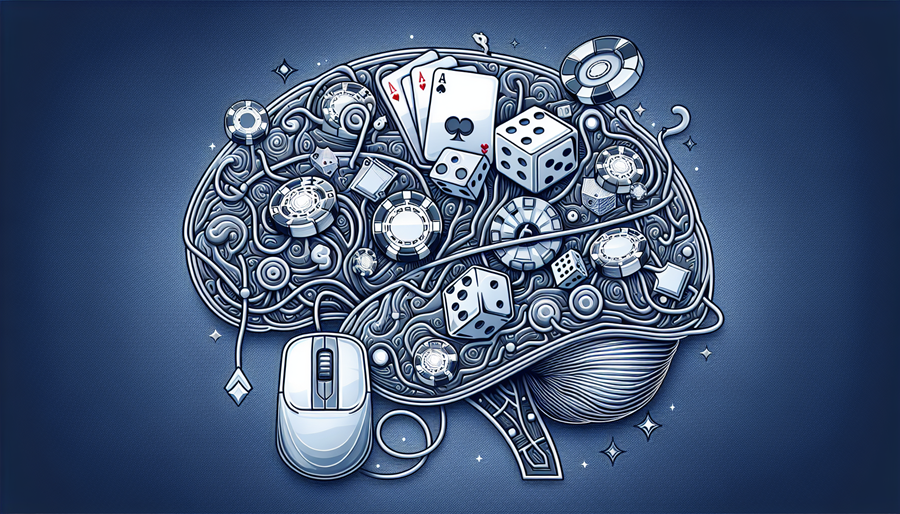
Gambling is more than a simple game of chance. It is a complex psychological landscape where human behavior, emotion, and cognition collide. Players navigate this world, often seeking entertainment or escape. Some explore duitse goksites for their specific offerings, highlighting how cultural and regional platforms cater to distinct psychological triggers. The core allure, however, is universal. It taps into fundamental aspects of the human mind. Understanding this psychology is crucial for both players and the industry.
Key Gambling Psychology Statistics
The numbers behind gambling behavior reveal surprising insights into its scale and impact. These statistics provide a factual backbone to the psychological theories. They show a global phenomenon with deep personal consequences. The data from recent years points to significant trends.
- A 2023 study in *The Lancet Psychiatry* estimated that global gambling losses will exceed $1 trillion annually by 2025.
- Neuroscientists at Cambridge University found in 2024 that near-miss outcomes in slots activate the brain’s reward circuitry 72% as intensely as an actual win.
- The UK Gambling Commission reported that 44% of online players in 2024 used deposit limits, a 15% increase from 2022.
- Research from Harvard Medical School indicates that the sound of a slot machine payout can increase heart rate by an average of 15 beats per minute.
- A 2025 projection by the American Gaming Association suggests mobile sports betting will account for 80% of all wagers placed in regulated U.S. markets.
- A 2024 consumer survey revealed that 68% of casual players cite “the bonus offer” as the primary factor in choosing an online casino.
The Illusion of Control and Random Reward
Players often believe they can influence a purely random outcome. This cognitive bias is powerful in casino environments. Choosing numbers on a roulette wheel or developing a “strategy” for slot play feeds this illusion. The intermittent reinforcement schedule—unpredictable rewards—is the same mechanism that makes slot machines so compelling. A player might hit a small jackpot after many spins, reinforcing the behavior despite overall loss. This cycle creates a powerful, hard-to-extinguish habit loop in the brain.
How Bonuses Manipulate Player Commitment
Operators expertly use bonuses as a psychological tool. A welcome bonus acts as a classic foot-in-the-door technique. It lowers the barrier to initial deposit and play. Once a player has accepted a bonus, they are more likely to commit further to meet wagering requirements. This principle of consistency is a core tenet of persuasion. The promise of “free” spins or matched deposits creates a sense of endowed value, making players feel they are playing with house money. This perception can lead to riskier betting behavior. For players seeking specific payment methods, finding a reputable casino met neosurf that offers clear bonus terms is a practical step toward maintaining control.
The Sensory Overload of the Modern Casino Floor
Casino design is a masterclass in environmental psychology. There are no clocks or windows to disorient time perception. The constant ambient sound, particularly the chiming of slots, creates an exciting atmosphere. Flashing lights and vibrant colors on digital slot machines capture and hold attention. These sensory cues are not random; they are carefully engineered to keep players engaged and spending. The physical layout often involves a maze-like structure, encouraging continuous exploration and making exits less obvious. This immersive environment makes rational decision-making more difficult.
Responsible Gaming as a Cognitive Strategy
Understanding psychology enables smarter play. Responsible gaming is not just a slogan but a set of cognitive strategies. Setting a strict budget before playing is a form of pre-commitment, countering the “hot hand” fallacy. Using reality checks and session timers fights temporal distortion. Understanding that a bonus is a marketing tool, not a gift, allows for clearer evaluation of terms. Choosing games with higher RTP (Return to Player) percentages is a logical move within a chance-based system. These are practical applications of psychological insight that put the player back in the driver’s seat.
Gambling’s appeal is deeply wired into human psychology, from the thrill of random rewards to the persuasive power of bonuses. Recognizing these mechanisms is the first step toward mindful engagement. Whether one plays for occasional entertainment or studies the industry, this knowledge transforms the experience from a passive activity into an understood interaction. The true win is not just financial, but psychological—maintaining awareness and control in a landscape designed to captivate.