
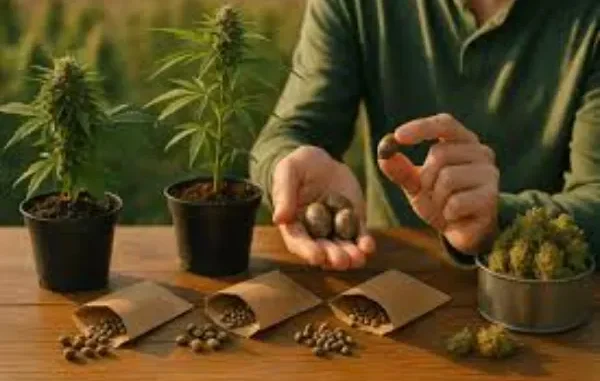
Hybrid cannabis seeds are more popular than ever, and for good reason. For growers seeking the best of both worlds, hybrids offer a balanced profile of traits that can lead to impressive yields, enhanced resilience, and unique cannabinoid and terpene profiles.
This guide will walk you through everything you need to know about how to choose cannabis seeds, specifically focusing on the versatile and powerful world of hybrids.
What Are Hybrid Cannabis Seeds?
At its core, a hybrid cannabis seed is the offspring of two different parent strains. This crossbreeding is done with a specific goal in mind: to combine the most desirable characteristics of each parent into a new, improved strain.
For example, a breeder might cross a tall, high-yielding Sativa with a short, fast-flowering Indica to create a hybrid that is both productive and quick to mature.
Most of the cannabis strains available today are hybrids to some degree. They exist on a spectrum from Indica-dominant to Sativa-dominant, with many balanced hybrids in between. This blending of genetics is what gives hybrids their unique and varied effects, making them a versatile choice for growers and consumers alike.
Benefits of Hybrid Seeds for Growers
Choosing hybrid seeds can lead to a more successful and rewarding cultivation experience. One of the most significant advantages is hybrid vigour in cannabis, a phenomenon where the hybrid offspring grows more robustly and produces higher yields than its parents. This enhanced performance is a direct result of the genetic diversity introduced through crossbreeding.
Hybrid seeds are also known for their improved resistance to pests and environmental stressors. This makes them a more forgiving option for novice growers or those cultivating in less-than-ideal conditions. Additionally, hybrids often have shorter flowering times than pure Sativas and produce more consistent results, especially in controlled indoor environments.
Another key benefit is the reduced variability in results. When you grow from hybrid seeds, especially those from reputable breeders, you can expect a more uniform crop. This consistency is particularly valuable for commercial growers who need predictable harvests, but it’s also helpful for home growers who want to know what to expect from their plants.
Understanding Hybrid Seed Lineage
While the genetics behind hybrid cannabis seeds can be complex, you don’t need to be a botanist to understand the basics. The key takeaway is that reputable breeders carefully select parent plants with specific traits and cross them to create new strains. Over time, and through a process of selection and stabilization, breeders can produce hybrid seeds that reliably express the desired characteristics.
This process of creating stable inbred lines cannabis is what leads to predictability in the final product. When you purchase seeds from a trusted source, you can be confident that the plants you grow will exhibit the traits described by the breeder.
What you should care about when evaluating cannabis seed generations is consistency and reliability. A well-bred hybrid will produce plants that look similar, flower at the same time, and deliver comparable yields.
Hybrid Seeds vs Regular Seeds
When exploring how to choose cannabis seeds, you will inevitably encounter the distinction between hybrid and regular cannabis seeds.
Regular seeds are the product of natural pollination and can be either male or female. They are often landrace strains or non-hybridized varieties, which means they may exhibit more phenotype variation cannabis seeds. This can be exciting for experienced growers who enjoy the thrill of discovery, but it can also lead to less predictable results.
Hybrid seeds, on the other hand, are typically feminized, meaning they are guaranteed to produce female plants. This is a significant advantage for most growers, as female plants are the ones that produce cannabinoid-rich flowers.
The debate of hybrid seeds vs regular seeds ultimately comes down to your goals as a grower. If you value consistency, predictability, and a streamlined cultivation process, hybrid seeds are the clear winner.
How to Choose the Right Hybrid Seeds for Your Grow
With so many hybrid strains available, choosing the right one can feel overwhelming. The best way to start is by defining your grow goals. Are you growing indoors or outdoors? What are your preferences for THC and CBD content? Are you aiming for massive yields, or is a quick flowering time more important? Answering these questions will help you narrow down your options.
Once you have a clear idea of what you’re looking for, it’s time to research specific strains and suppliers. Look for transparent suppliers who provide detailed information about their seeds, including the parent lineage and expected traits. Align your strain choice with your environment, experience level, and desired outcomes.
Consider the physical space you have available as well. Some hybrids grow tall and stretchy, while others remain compact and bushy. If you’re growing indoors with limited vertical space, an Indica-dominant hybrid might be your best bet. Outdoor growers with plenty of room might prefer a more Sativa-leaning hybrid that can reach impressive heights and produce massive yields.
Top Cultivation Pitfalls and How to Prevent Them
While hybrid seeds offer many advantages, there are a few common pitfalls to be aware of. First, it’s important to remember that not all hybrid seeds are created equal. Some are more stable and consistent than others, so it’s crucial to source your seeds from a reputable supplier. Be wary of marketing hype and unrealistic claims.
Another common mistake is neglecting the growing environment. Even the best genetics won’t thrive in poor conditions. Make sure you have adequate lighting, proper ventilation, and a high-quality growing medium. Temperature and humidity control are also critical factors that can make or break your harvest.
Finally, it’s important to understand that hybrid seeds are not ideal for seed-saving if your goal is to maintain uniformity. Due to the way they are bred, the seeds produced by a hybrid plant may not grow up to have the same traits as the parent.
Grower’s Terminology: From Seed to Harvest
Hybrid cannabis seeds
Seeds created by crossbreeding two different parent strains to combine their desirable traits. The goal of creating hybrids is to bring together the best characteristics from each parent plant, whether that’s increased yield, better pest resistance, unique flavors, or specific cannabinoid profiles.
When you purchase hybrid seeds, you’re getting the result of careful selection and breeding work designed to produce plants with predictable, desirable outcomes. Most modern cannabis strains available today are hybrids to some degree, reflecting decades of breeding innovation.
Phenotype
The observable characteristics of a plant, such as its height, leaf shape, flower structure, color, aroma, and growth pattern. The phenotype is what you can actually see, smell, and measure when you look at a plant.
Even seeds from the same parent plants can express different phenotypes, which is why you might notice slight variations between plants grown from the same seed batch. Understanding phenotype helps you recognize what to expect from your plants and how to identify desirable traits worth preserving through cloning.
Genotype
The genetic makeup of a plant, which determines its potential characteristics. Think of genotype as the blueprint or instruction manual encoded in the plant’s DNA. While the genotype sets the potential for what a plant can become, environmental factors like light, nutrients, and temperature influence how those genes are expressed.
Two plants with identical genotypes can display different phenotypes if grown under different conditions. This is why proper growing conditions are just as important as quality genetics.
Landrace strain
A cannabis variety that has adapted to a specific geographic region over time through natural selection. Landrace strains are the original, pure cannabis genetics that developed in places like Afghanistan, Thailand, Colombia, and South Africa.
These strains have unique characteristics shaped by their native environments and represent the genetic foundation from which most modern hybrids are derived. While landrace strains are historically significant, they’re often less consistent and harder to grow than modern hybrids, which is why most growers prefer hybridized versions.
Regular seeds
Seeds that can be either male or female, produced through natural pollination. When you plant regular seeds, you’ll get approximately a 50/50 split of male and female plants. Male plants are typically removed from the grow space before they release pollen, as pollination causes female plants to produce seeds instead of focusing energy on flower production.
Regular seeds are preferred by breeders who want to create new strains or preserve genetics, but for most growers focused on flower production, feminized seeds are more practical.
Feminized seeds
Seeds that are specially bred to produce only female plants. These weed seeds are created using breeding techniques that ensure nearly 100% of the resulting plants will be female. Since only female plants produce the cannabinoid-rich flowers that growers are after, feminized seeds eliminate the need to identify and remove male plants.
This makes the growing process more efficient and ensures that all your time, space, and resources go toward plants that will produce a harvestable crop. Feminized seeds have become the standard for most home and commercial growers.
Autoflowering seeds
Seeds that automatically begin to flower after a certain period of time, regardless of the light cycle. Unlike photoperiod plants that require a change in light schedule to trigger flowering, autoflowering plants will flower based on age, typically within 2-4 weeks of germination.
This trait comes from cannabis ruderalis genetics and makes autoflowering strains ideal for beginners, outdoor growers in regions with short summers, or anyone who wants a quick harvest. The trade-off is that autoflowering plants are generally smaller and produce lower yields than photoperiod plants, though modern breeding has significantly improved their performance.
Understanding these basic terms will help you make more informed decisions when evaluating seed options. While you don’t need to become an expert in cannabis genetics, having a working knowledge of these concepts will allow you to better communicate with suppliers and understand product descriptions.
When you read a seed description that mentions phenotype variation or autoflowering traits, you’ll know exactly what to expect and whether that strain aligns with your growing goals and experience level.
FAQs
What are hybrid cannabis seeds and why are they popular?
Hybrid cannabis seeds are the result of crossing two different cannabis strains. They are popular because they combine the best traits of both parents, leading to improved yield, resilience, and unique effects.
Are hybrid seeds good for beginners?
Many hybrid strains are an excellent choice for beginners. They are often more resilient and forgiving than pure strains, and their predictable growth patterns make them easier to manage.
Can I save seeds from a hybrid plant?
While you can save seeds from a hybrid plant, they may not produce plants with the same characteristics as the parent. For consistent results, it is best to purchase fresh seeds from a reput.
Are hybrid cannabis seeds more potent?
Hybridization can lead to increased potency, but this is not always the case. The potency of a hybrid strain depends on the specific parent plants used in the cross and the breeder’s selection process.
How do I know if a hybrid seed is right for my grow space?
Consider the mature size of the plant, its flowering time, and its environmental preferences. Reputable seed suppliers will provide this information to help you choose a strain that is well-suited to your grow space.
Conclusion
Choosing high-quality hybrid cannabis seeds is one of the best ways to ensure a successful and rewarding harvest. They offer a winning combination of performance, predictability, and versatility that is hard to beat.
By defining your needs and carefully selecting a strain that aligns with your goals, you can set yourself up for a fantastic growing experience. Remember to invest just as much in your grow conditions as you do in your genetics for the best possible results.