
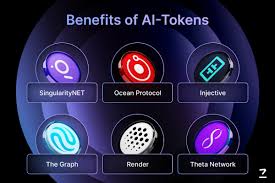
What are tokens in AI?
The phrase “tokens in AI” can mean two different things. In artificial intelligence models, tokens are small units of text that a model reads and generates. In crypto, AI tokens are digital assets connected to blockchain projects that use artificial intelligence. If you are asking what are tokens in ai, the first step is to understand which meaning is being used: AI model tokens or AI crypto tokens.
This distinction matters because the two concepts are not the same. A token inside a language model is not a cryptocurrency. It is a piece of text used for processing prompts and responses. An AI crypto token, on the other hand, is a blockchain-based asset that may be used for payments, governance, staking, access to AI services, data marketplaces, decentralized compute or other project-specific functions.
In the crypto market, “AI tokens” usually refers to cryptocurrencies connected with artificial intelligence projects. These projects may focus on decentralized compute, AI agents, data sharing, model training, prediction markets, automation, blockchain analytics or AI-powered applications.
Quick answer
Tokens in AI can mean either text units used by AI models or crypto assets connected to AI projects. In language models, tokens are pieces of text that the model processes. In crypto, AI tokens are digital assets used by blockchain projects that apply artificial intelligence. AI crypto tokens may give access to AI tools, pay for decentralized compute, reward data providers, support governance or power AI-based applications.
Key points in 30 seconds
- The term “AI token” has two meanings.
- In AI models, a token is a unit of text processed by the model.
- In crypto, an AI token is a blockchain asset connected to an AI-related project.
- AI crypto tokens may be used for payments, governance, staking, access, rewards or network incentives.
- AI tokens are not automatically valuable just because a project uses artificial intelligence.
- Strong projects usually need real utility, active users, transparent tokenomics and sustainable demand.
- AI crypto is a high-risk sector because it combines two volatile areas: crypto and artificial intelligence.
- Investors should check the product, team, token supply, unlocks, market cap, liquidity and real adoption.
- Not every “AI token” is truly decentralized or technically strong.
- Before investing, compare the token’s hype with its real use case.
AI model tokens vs AI crypto tokens
The word “token” is used in both AI and crypto, but it means different things.
| Term | Meaning | Example |
| AI model token | A piece of text processed by an AI model | A word, part of a word, punctuation mark or space |
| AI crypto token | A blockchain-based digital asset connected to an AI project | Token used for compute, governance, staking or access |
| Utility token | Token used inside a crypto ecosystem | Paying for services or accessing a platform |
| Governance token | Token used for voting | Voting on protocol changes |
| Reward token | Token distributed for participation | Rewards for compute, data or network activity |
If someone talks about “tokens” in ChatGPT or another language model, they probably mean text units. If someone talks about “AI tokens to invest in,” they usually mean crypto tokens connected to AI projects.
What are tokens in AI models?
In AI models, tokens are the building blocks of text. A model does not process text exactly like a human reads words. It breaks text into smaller units called tokens.
A token can be:
- a full word;
- part of a word;
- a number;
- punctuation;
- a space;
- a symbol.
For example, a short sentence may be split into several tokens. This helps the model process input, generate output and calculate usage costs.
AI model tokens matter because they affect:
- how much text a model can process;
- how much an API request may cost;
- how long a response can be;
- how large a document can be analyzed;
- how expensive AI agents can become.
But these tokens are not tradable assets. You cannot buy or sell a language model token like a cryptocurrency.
What are AI crypto tokens?
AI crypto tokens are blockchain-based digital assets connected to projects that use artificial intelligence. These projects may combine AI with decentralized infrastructure, smart contracts, data marketplaces, autonomous agents or distributed computing.
An AI crypto token may be used to:
- pay for AI services;
- access models or applications;
- reward users who provide data;
- reward users who provide computing power;
- govern protocol decisions;
- stake in a network;
- secure decentralized infrastructure;
- coordinate incentives between users, developers and service providers.
The exact role depends on the project. Some AI tokens have clear utility. Others are mostly speculative and depend heavily on market hype.
Why AI and crypto are being combined
AI and crypto solve different problems, but they can overlap in several areas.
AI needs:
- data;
- compute;
- models;
- infrastructure;
- payments;
- verification;
- access control;
- coordination.
Blockchain can provide:
- digital ownership;
- token incentives;
- transparent settlement;
- decentralized governance;
- programmable payments;
- on-chain records;
- open marketplaces.
The idea behind many AI crypto projects is to use blockchain incentives to coordinate people, machines, data and compute resources around AI systems.
Common use cases for AI crypto tokens
AI crypto tokens can support different types of projects.
| Use case | How the token may be used |
| Decentralized compute | Pay providers who supply GPU or CPU power |
| AI model marketplaces | Pay for model access or API use |
| Data marketplaces | Reward users for sharing or labeling data |
| AI agents | Pay for automated services or agent actions |
| Prediction tools | Access AI-based analytics or forecasting |
| Blockchain analytics | Pay for AI-powered risk scoring or insights |
| Decentralized storage | Store datasets or model outputs |
| Governance | Vote on protocol decisions |
| Staking | Secure the network or access services |
| Rewards | Incentivize users, developers or infrastructure providers |
The strongest AI token projects usually have a token that is actually needed for the system to work. If the token is not necessary, the investment case may be weaker.
How AI tokens work in crypto projects
AI crypto tokens usually work through smart contracts and blockchain networks. The token may be issued on an existing blockchain or as part of a project’s own network.
A typical flow may look like this:
- A user needs an AI service.
- The user pays with the project’s token.
- A provider delivers compute, data, model access or another service.
- The protocol records activity.
- Providers may receive token rewards.
- Token holders may vote on governance decisions.
- The token may also trade on exchanges.
This structure can create an internal economy. But the economy works only if there is real demand for the service, not just demand for the token.
Types of AI crypto tokens
AI crypto tokens can be grouped by function.
| Token type | Main purpose |
| Compute tokens | Pay for decentralized computing resources |
| Data tokens | Reward data sharing, labeling or access |
| Agent tokens | Power AI agent platforms |
| Governance tokens | Vote on project decisions |
| Marketplace tokens | Buy and sell AI tools, models or services |
| Infrastructure tokens | Support decentralized AI networks |
| Analytics tokens | Access AI-based insights or signals |
| Hybrid tokens | Combine several functions |
Many projects use more than one function. For example, one token may be used for payments, staking and governance at the same time.
AI tokens and decentralized compute
One of the most important AI crypto narratives is decentralized compute.
AI models require large amounts of computing power. Centralized AI companies often rely on major cloud providers and expensive GPU clusters. Decentralized compute projects try to create open marketplaces where people or companies can rent out unused computing resources.
In this model, tokens may be used to:
- pay compute providers;
- reward node operators;
- access GPU resources;
- stake for network participation;
- coordinate supply and demand.
This use case is attractive because AI demand for compute is real. However, execution is difficult. A decentralized compute network must compete with centralized cloud providers on reliability, price, speed, developer experience and security.
AI tokens and data marketplaces
AI systems need data. Some crypto projects try to build data marketplaces where users can provide, sell or license data for AI training and analytics.
Tokens may be used to:
- reward data providers;
- pay for dataset access;
- verify data contributions;
- incentivize labeling;
- govern marketplace rules.
This sounds powerful, but it also creates challenges. Data quality, privacy, consent, legal rights and verification are difficult problems. A project is stronger if it explains clearly how it handles these issues.
AI tokens and AI agents
AI agents are systems that can perform tasks with some level of autonomy. In crypto, AI agents may interact with wallets, smart contracts, DeFi protocols, marketplaces or data services.
AI agent tokens may be used to:
- pay agents for tasks;
- access agent platforms;
- reward developers;
- govern agent marketplaces;
- coordinate autonomous services;
- pay for API calls, tools or compute.
This area is still developing. It may become important, but it also carries risk because many agent-based projects are early-stage and may not yet have stable real-world demand.
AI tokens and governance
Some AI crypto tokens are governance tokens. This means holders can vote on project decisions.
Governance may include:
- protocol upgrades;
- fee changes;
- treasury spending;
- reward distribution;
- partnerships;
- model marketplace rules;
- network parameters.
Governance sounds useful, but investors should ask whether token holders have meaningful control or whether voting is mostly symbolic. If insiders hold most of the supply, governance may be centralized in practice.
AI tokens and staking
Some AI tokens allow staking. Staking may be used to secure the network, access services, earn rewards or participate in governance.
Staking can support network incentives, but it can also hide inflation. If staking rewards come from newly issued tokens rather than real revenue, the token price may face long-term pressure.
Before staking, users should check:
- lock-up period;
- reward source;
- inflation rate;
- slashing risk;
- unstaking delay;
- smart contract risk;
- whether rewards are sustainable.
How AI crypto tokens get value
AI crypto tokens may gain value when there is real demand for the network or service.
Possible value drivers include:
| Driver | Why it matters |
| Real platform usage | Shows users need the product |
| Token utility | Gives the token a role in the ecosystem |
| Revenue or fees | Creates economic activity |
| Scarcity | Limits supply pressure |
| Staking demand | Can reduce liquid supply |
| Governance rights | May matter for valuable protocols |
| Partnerships | Can increase adoption |
| Exchange liquidity | Makes trading easier |
| Developer activity | Shows ecosystem growth |
| Market narrative | Can attract attention, but may be unstable |
A strong narrative can push prices up temporarily. But long-term value usually needs product usage and sustainable token demand.
AI tokenomics explained
Tokenomics means the economic design of a token.
For AI tokens, tokenomics may include:
- total supply;
- circulating supply;
- emission schedule;
- vesting and unlocks;
- team allocation;
- investor allocation;
- community rewards;
- staking rewards;
- burn mechanisms;
- fee capture;
- governance rights;
- utility inside the platform.
Tokenomics matters because a project can have strong technology but weak token economics. If too many tokens unlock too quickly, price pressure may increase. If the token has no real utility, demand may depend mostly on speculation.
What to check before investing in AI tokens
Before investing in any AI crypto token, check the fundamentals.
| Area | What to check |
| Product | Is there a working product or only a white paper? |
| AI use case | Is AI essential or just marketing? |
| Token utility | Does the token have a real role? |
| Team | Are developers and founders credible? |
| Adoption | Are users actually using the platform? |
| Revenue | Does the project generate fees or income? |
| Tokenomics | Are unlocks and emissions reasonable? |
| Liquidity | Can you buy and sell without large slippage? |
| Security | Have smart contracts been audited? |
| Competition | Can the project compete with centralized AI services? |
| Regulation | Could legal rules affect the token? |
| Roadmap | Are milestones realistic? |
The goal is to separate real infrastructure from AI-themed speculation.
Common risks of AI crypto tokens
AI tokens can be risky because they combine crypto volatility with early-stage AI uncertainty.
Main risks include:
- hype-driven price spikes;
- weak real-world usage;
- unclear token utility;
- high token inflation;
- insider unlocks;
- low liquidity;
- smart contract bugs;
- governance centralization;
- regulatory pressure;
- misleading AI claims;
- dependence on off-chain infrastructure;
- competition from centralized AI companies;
- lack of revenue;
- market-wide crypto crashes.
A project can have an exciting AI story and still be a poor investment if the token does not capture value.
AI token hype vs real utility
Many projects use AI language because the sector attracts attention. But not every project that mentions AI has a strong AI product.
Warning signs include:
- vague AI claims;
- no working demo;
- no clear token utility;
- no technical documentation;
- anonymous team with no track record;
- unrealistic return promises;
- heavy marketing but little product;
- high insider allocation;
- unclear revenue model;
- no explanation of data, compute or model infrastructure.
A serious AI token project should clearly explain what the AI does, why blockchain is needed and how the token supports the system.
AI tokens vs traditional AI stocks
Investors sometimes compare AI crypto tokens with AI stocks. They are very different.
| Feature | AI crypto tokens | AI stocks |
| Ownership | Usually no equity ownership | Share in a company |
| Regulation | Varies by jurisdiction | More established securities rules |
| Volatility | Usually very high | Can be high, but often lower |
| Utility | May be used inside protocol | Represents company ownership |
| Revenue claim | Often indirect or none | Company revenue and earnings matter |
| Liquidity | Depends on exchanges | Depends on stock market |
| Risk | Crypto, tech and tokenomics risk | Business and market risk |
Buying an AI token usually does not mean owning part of the company. It means holding a digital asset that may or may not benefit from the project’s success.
AI tokens vs regular crypto tokens
AI tokens are a subcategory of crypto tokens. What makes them different is their connection to artificial intelligence use cases.
| Regular crypto token | AI crypto token |
| Can power any blockchain project | Connected to AI-related use cases |
| May focus on DeFi, gaming, payments or infrastructure | May focus on compute, data, agents or models |
| Value depends on project utility and market demand | Value depends on AI utility, token design and adoption |
| May not involve AI at all | AI is part of the project narrative or product |
The same investment rules still apply: utility, adoption, liquidity, security and tokenomics matter.
How to research AI tokens
A simple research process:
- Read the project website.
- Check whether the product is live.
- Look for real users and activity.
- Read tokenomics and unlock schedule.
- Check market cap and fully diluted valuation.
- Review exchange liquidity.
- Look at GitHub or developer activity if available.
- Read audits and security reports.
- Compare the project with competitors.
- Ask whether the token is necessary.
- Check whether AI is actually used.
- Decide whether the risk fits your portfolio.
If the project is hard to understand, that is a signal to be careful, not a reason to invest blindly.
Example categories of AI crypto projects
| Category | Example purpose |
| Decentralized compute | Rent GPU or CPU power |
| AI data networks | Provide data for AI training |
| AI agents | Automate on-chain or off-chain tasks |
| Prediction and analytics | Use AI to analyze markets or blockchain data |
| Model marketplaces | Buy or sell access to AI models |
| Identity and verification | Verify humans, agents or data |
| Storage and infrastructure | Store AI-related data or outputs |
| Security tools | Detect fraud, scams or suspicious transactions |
These categories are still evolving. Some may grow, while others may fail to find sustainable demand.
How AI tokens may be used in the future
AI crypto tokens may become more important if decentralized AI systems gain adoption.
Possible future uses include:
- paying for decentralized AI inference;
- rewarding data contributors;
- verifying AI-generated content;
- coordinating autonomous AI agents;
- paying for GPU marketplaces;
- managing model ownership;
- governing open AI networks;
- funding AI research communities;
- connecting AI agents with blockchain payments.
However, the future is uncertain. Centralized AI companies are powerful competitors, and many blockchain-based AI models still need to prove they can scale.
Should beginners invest in AI tokens?
Beginners should be cautious. AI tokens can be exciting, but they are also volatile and complex.
AI tokens may be suitable only if the investor:
- understands crypto risk;
- can tolerate high volatility;
- researches tokenomics;
- avoids leverage;
- diversifies;
- does not invest money needed for living expenses;
- understands that hype can disappear quickly;
- checks whether the project has real utility.
For beginners, learning the sector first is usually better than buying based on a list or social media trend.
Common mistakes when buying AI tokens
- Buying only because the token name includes AI.
- Ignoring token unlocks.
- Confusing AI model tokens with crypto tokens.
- Assuming every AI project will grow.
- Ignoring market cap and valuation.
- Buying illiquid tokens.
- Not checking whether the product works.
- Ignoring regulatory risk.
- Believing guaranteed return promises.
- Holding too much of one speculative token.
- Ignoring security audits.
- Forgetting that token price can fall even if the technology is interesting.
AI token checklist
Before buying an AI token, ask:
- What problem does the project solve?
- Is the AI component real and necessary?
- Why does the project need a token?
- What is the token used for?
- Is there a working product?
- Who are the users?
- Is there real demand?
- What is the circulating supply?
- What is the fully diluted valuation?
- When are token unlocks?
- Who holds the largest allocations?
- Is the token listed on liquid exchanges?
- Are smart contracts audited?
- Does the team have experience?
- Can the project compete with centralized AI companies?
- What could make the token lose value?
If the answers are unclear, the risk is higher.
FAQ
What are tokens in AI?
Tokens in AI can mean two things. In AI models, tokens are pieces of text processed by the model. In crypto, AI tokens are blockchain-based assets connected to artificial intelligence projects.
Are AI tokens the same as cryptocurrency tokens?
AI model tokens are not cryptocurrency tokens. They are text units used by AI systems. AI crypto tokens are digital assets that can be traded or used inside blockchain projects.
What are AI crypto tokens?
AI crypto tokens are digital assets connected to blockchain projects that use artificial intelligence. They may be used for compute, data, governance, staking, rewards, access or payments.
How do AI tokens work?
AI crypto tokens usually work through blockchain networks and smart contracts. They may allow users to pay for AI services, reward compute providers, govern protocols or access AI-powered applications.
Why do AI projects use tokens?
AI projects may use tokens to coordinate incentives, reward users, pay infrastructure providers, govern networks or create marketplaces for compute, data and AI services.
Are AI tokens a good investment?
AI tokens can have growth potential, but they are high-risk assets. Investors should check product utility, tokenomics, liquidity, adoption, unlocks, security and market conditions before investing.
What is the difference between AI tokens and AI coins?
People often use the terms interchangeably. Technically, a coin usually belongs to its own blockchain, while a token is issued on an existing blockchain. In practice, “AI tokens” often means the broader category of AI-related crypto assets.
Can AI tokens be used to pay for AI services?
Yes, some projects use tokens to pay for AI tools, model access, compute, data or automated services.
What are the biggest risks of AI tokens?
The biggest risks include hype, weak utility, poor tokenomics, low liquidity, smart contract bugs, regulatory pressure, insider unlocks and lack of real adoption.
How can I identify a strong AI token project?
Look for a real product, clear AI use case, meaningful token utility, active users, transparent tokenomics, credible team, strong security and sustainable demand.
Quick summary
The phrase “tokens in AI” has two meanings. In artificial intelligence models, tokens are text units that a model processes. In crypto, AI tokens are blockchain-based assets connected to artificial intelligence projects.
AI crypto tokens may support decentralized compute, AI agents, data marketplaces, model access, governance, staking and payment systems. Some projects may become useful infrastructure, while others may rely mostly on hype.
Before investing, users should understand the project, token utility, tokenomics, unlocks, liquidity, product adoption and risks. AI is a powerful narrative, but a token needs real demand to have long-term value.
Conclusion
AI tokens are one of the most discussed areas of the crypto market, but the term can be confusing. A token inside an AI model is a unit of text. An AI crypto token is a digital asset connected to an artificial intelligence project. These are very different concepts.
In crypto, AI tokens may help power decentralized compute, data networks, model marketplaces, AI agents and other blockchain-based AI systems. The opportunity is real, but so are the risks. Many projects are early, experimental and highly speculative.
The best approach is to separate hype from utility. Before buying any AI token, ask what the project actually does, why it needs a token, who uses it, how supply is managed and what could make demand grow. In a fast-moving sector, careful research matters more than following the trend.