

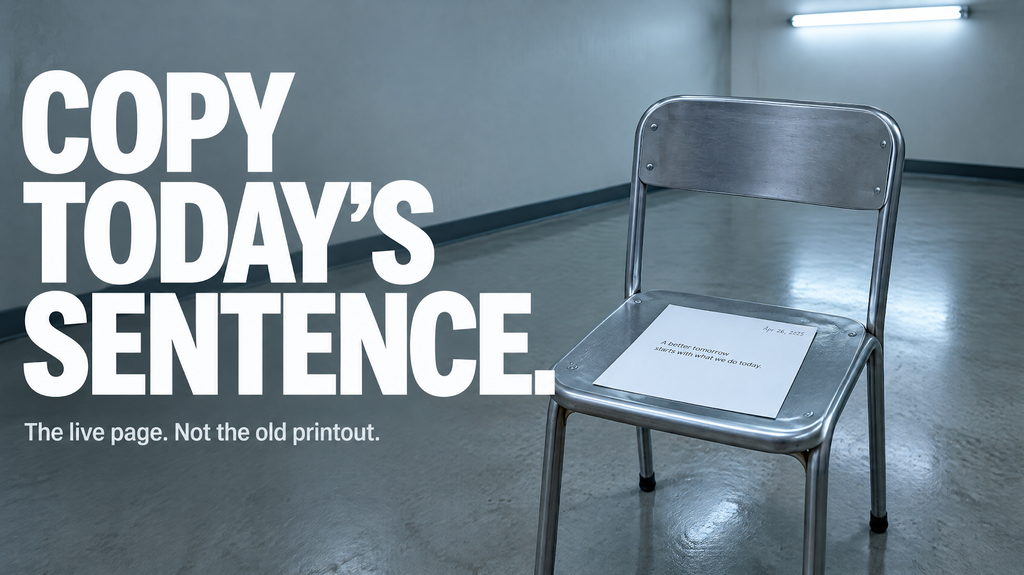
The sentence already on the campaign page is the statement. A video that adds a tax figure, a crowd, or a line the candidate never said is a second statement. Check the first one before anyone pictures it.
This is the ordinary work of a small campaign or an advocacy group. The website explains a position. A volunteer then wants something short for a meeting, a mailer, or a social post. The short version is useful only when it can be read back against the page.
Copy the sentence that already went out
Open the page a voter can open too. Copy the sentence you mean to repeat, and write the date beside it. Name who stands behind it: the candidate, the treasurer, or the group. If the page has been edited since the last printout, use the live page, not the printout in the folder.
Write down what that sentence does not say. It may not name the opponent. It may not quote a poll. It may not promise the result of a vote that has not been taken. Those omissions are part of the statement. A shorter video does not get to fill them in because the gap looks awkward on screen.
If two pages disagree, a leaflet and the site, or a candidate’s own post and the campaign’s, stop and pick the one the campaign is willing to defend this week. The video cannot reconcile them by splitting the difference.
List the additions that would make it a different claim
Four additions change the statement even when the spoken words stay close.
A face. The candidate appears only if that person has agreed to be shown, and agreed to the voice. A generated face is not the candidate. A neighbor, a voter at a rally, and a child in a crowd photo are not extras. Leave them out unless they agreed as well.
A number that is not in the sentence. A percentage, a dollar figure, or a crowd size needs its own source on the page. If the page does not carry it, the video does not carry it.
A place that implies an event. A courthouse step, a full hearing room, or a factory gate tells the viewer the candidate was there. Use that picture only when the campaign can point to the event. An empty room you filmed, or a room you generated, is not a record of the hearing.
A voice that is not a recording they made. Reading their published sentence aloud, with their permission, is one thing. Implying they spoke those words on camera is another. If they did not record it, the video should not present it as their speech.
Someone on the campaign should be able to point at the page and say which of these four, if any, the video is allowed to include. If the answer is none, the video is type, a still of the page, or the candidate’s own approved recording. It is not a scene.
Get the shorter line signed by the same people
Read the proposed video line next to the copied sentence. Every claim in the short line has to be present in the long one. A paraphrase that adds “fully funded” or “starts Monday” is a new claim, even if it sounds like a tidier version of the original.
The person whose name is on the page, or the officer the campaign has designated, signs the short line or sends it back. A vendor, a volunteer with a laptop, and a tool do not sign it for them. If they will not sign it, do not picture it.
Keep the signed line, the page address, and the date in the same folder as the script. The folder is what you show when someone asks what the candidate actually committed to.
Picture only the line that survived that check
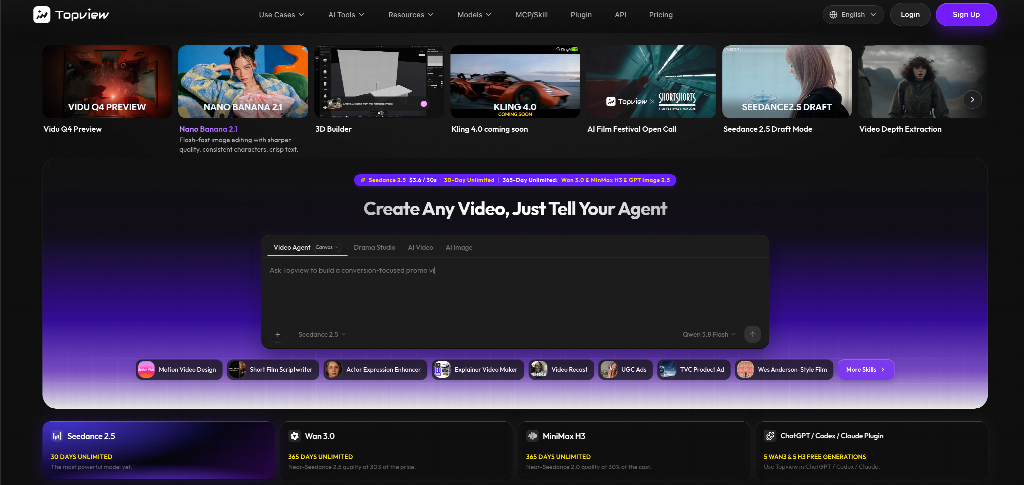
Topview is the workspace for that signed line, once the campaign has decided to picture it. You describe the idea, paste the line, add a reference for the pace, or point at the page that already states the position. It plans the scenes, selects among the models available there, generates the assets, and leaves the shots editable on the Canvas. A prompt, a link, an image, a video, or a mix of those can start the same job. What the plan includes, and what a generation spends, is listed on the site before you run it.
You still place the file yourself, on the page, in the ad, or in the message. The workspace does not speak for the candidate, and it does not check the sentence against the public record. That check happened before you opened it. If a frame adds a face, a number, or a place the signed line did not allow, take that frame out before the file leaves the folder.
Send the page address with the file
Whoever receives the video should also receive the address and the date you read it. A voter, a reporter, or the opponent’s campaign can open the same page. If the video and the page disagree, the page is the statement you are willing to defend.
If you only have time for one of these steps, copy the sentence and get it signed. A meeting can proceed with that sentence read aloud. It cannot proceed with a scene the campaign has not stood behind.