
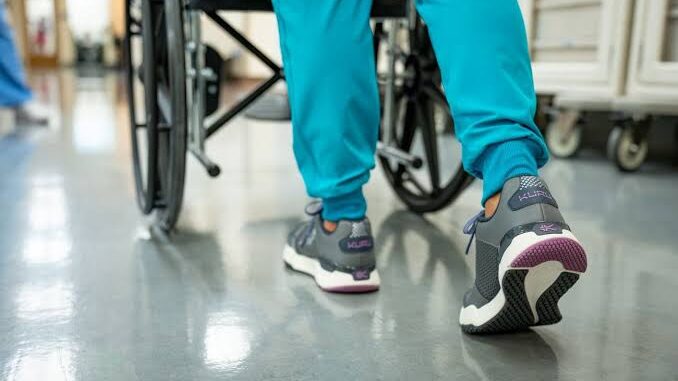
Staying healthy in a job that keeps you standing most of the day comes down to a few daily habits, including posture, footwear, floor surfaces and regular movement. Nurses, stylists, teachers, servers and retail workers all deal with long stretches on their feet, and small adjustments in each area add up over months and years of work.
Posture and Ergonomics
One quick check is whether your ears, shoulders and hips line up while you work, and leaning on one hip or craning forward is a cue to reset. Keeping tools and supplies at a comfortable height in front of you reduces reaching and bending, which keeps the back and shoulders comfortable through a full day of standing.
Stylists form many of their working habits in cosmetology school, where students work on real guests in a student salon, so that’s a good time to settle posture and station height. Anyone starting a new job on their feet can do the same by building habits during the first few weeks, while the routine is taking shape.
Footwear and Floor Surfaces
Cushioned shoes with good arch support take pressure off the heels and knees, and worn-out pairs lose that protection once the padding flattens. Rotating two pairs spreads the wear and keeps each pair supportive for longer. Hard floors add to the load, so an anti-fatigue mat or a thick pad helps wherever you stand in one spot, such as a styling station, a counter or a bedside. Some people also find compression socks helpful for swelling, and a pharmacist or doctor can say whether they suit you.
Movement Habits During the Workday
Change position often: Plan on moving every half hour or so, even if that only means bending your knees, stretching your calves or sitting for a minute when the work allows it, since staying in one position for long stretches is what tires the legs and back.
Use a low stool: Resting one foot on a low stool and alternating sides takes some load off the lower back during long stretches in one spot, which is especially useful at counters and reception desks where stepping away isn’t possible.
Stretch at natural pauses: Calf, hip and lower back stretches fit easily between clients, patients or customers, and a few slow breaths while you stretch help you reset before the next person arrives, so the routine adds no extra time to the day.
Recovery After Work
Put your legs up for a few minutes and roll the arches of your feet over a tennis ball when you get home, which gives tired muscles a chance to recover. Swelling, numbness or pain that doesn’t ease with rest is worth mentioning to a doctor early, since adjustments are easier to make before discomfort becomes routine.
Choose whichever change feels easiest, whether it’s new shoes, a floor mat or a phone timer that reminds you to move, and keep it for a few weeks before adding another so you can see what actually helps your legs and back.