
Every travel photographer knows this feeling.
You’ve planned the shot. You checked the weather. You scouted the location on Google Earth the night before. And then—traffic. Or a trail that’s longer than expected. Or a hill that eats up the last minutes of golden hour while the sky turns from gold to gray.
The light doesn’t wait.
After years of traveling solo with a camera on my back, I realized something uncomfortable: creativity wasn’t my biggest limitation. Logistics were. The best photographs rarely come from places with parking lots.
When the Perfect Light Is Always “Just a Little Too Far”
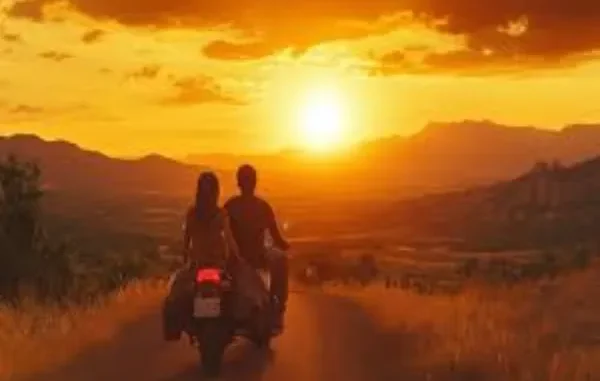
Golden hour is cruel. It lasts minutes, not hours. And the places where light looks most dramatic—ridge lines, coastal cliffs, empty dirt roads—are usually just out of reach.
Walking is too slow. Cars are often useless once pavement ends. And renting a 4×4 or overland vehicle every time you travel is expensive, stressful, and completely unrealistic for long-term travelers.
What photographers really need is range without noise, mobility without bulk, and freedom without a massive budget. That’s when I started paying attention to electric two-wheel travel.
Adventure on a Budget: Why Expensive Gear Isn’t the Answer
Travel photography already demands enough money—flights, accommodation, lenses, backups, insurance. Adding a rugged vehicle on top of that can turn creativity into a luxury hobby.
This is why the rise of the cheap electric motorcycle quietly changed the game for independent travelers. “Cheap” here doesn’t mean low quality. It means:
- No fuel costs
- Minimal maintenance
- No complex mechanical failures in remote places
- A price point that doesn’t compete with rent or flights
Instead of pouring money into gas and repairs, that budget goes back into travel time, location scouting, or staying an extra night to wait for better light. For photographers, that trade-off matters more than horsepower stats.
When Pavement Ends, That’s Where Stories Begin
Some of the most powerful images I’ve ever taken were never planned. A gravel road that turns into mud. A farm track leading to a cliff. A half-forgotten path visible only as a faint line on satellite imagery.
This is where a city scooter fails instantly.
An electric dirt bike for adults exists for exactly this reason. Suspension matters. Tire width matters. Ground clearance matters. You don’t want to be thinking about balance when your focus should be on framing, clouds, and shadows.
This is also where I finally understood the value of a purpose-built platform instead of improvising with underpowered gear.
One Tool, One Job: Why I Use the HappyRun G100 Pro
I don’t treat transportation as a lifestyle statement. For me, it’s a tool—like a tripod or a drone. It either enables the shot or it doesn’t.
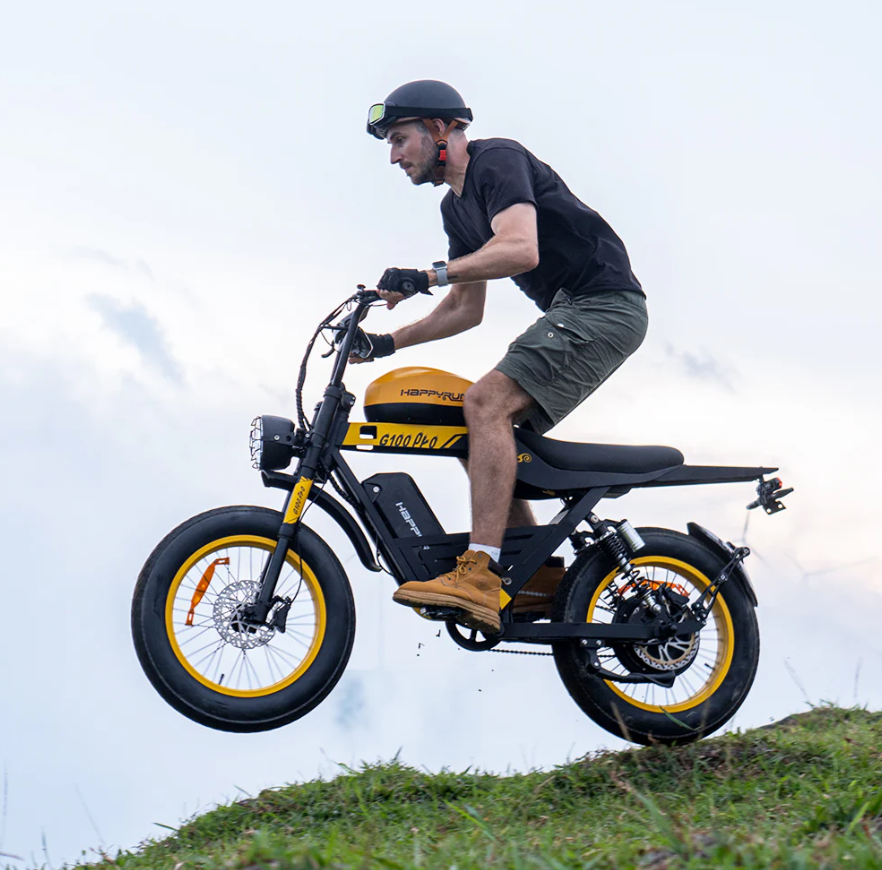
The HappyRun G100 Pro fits into my workflow because it combines raw capability with reliability. When I have a heavy camera bag and a steep incline between me and the perfect vantage point, I rely on its 6000W peak motor to get me there without hesitation.
Range anxiety is the enemy of exploration, but the G100 Pro’s 72V18Ah (Top)+15Ah(Bottom)Lithium Battery, allowing me to venture deep into unmapped territory and back. And if the light is fading fast, the ability to reach 50 MPH means I can race the sunset and win.
Its full suspension handles broken roads without shaking my gear to death, and its electric drive lets me move quietly through environments where sound would break the moment. When light appears unexpectedly, this bike becomes an extension of my scouting instincts—powerful, fast, and reliable.
Silence Is a Photographer’s Superpower
Gas engines announce your presence before you arrive. Electric movement doesn’t.
Riding silently through forests, along coastlines, or near wildlife changes how you experience a place—and how it responds to you. Birds don’t scatter instantly. The environment feels intact instead of interrupted.
For photographers working with natural light and atmosphere, that silence creates space. You’re not rushing. You’re observing. Some of my favorite images came from moments where I simply stopped, turned off the bike, and waited—without the lingering echo of an engine behind me.
How I Carry Camera Gear Without Destroying It
Travel photography on two wheels requires intention. Here’s what works for me:
- A padded camera backpack worn snug against the back.
- Lighter lenses mounted before riding, not swapped on location.
- Straps tightened so nothing shifts on uneven terrain.
I avoid side-mounted hard cases for cameras. They look secure but amplify vibration. Soft, body-mounted carry keeps gear stable and responsive when stopping quickly for a shot. The goal is always the same: arrive ready to shoot, not ready to fix equipment.
The Map Is Only a Suggestion
Some of the best photos I’ve taken were never pinned, never bookmarked, never reviewed.
They happened because I could turn left instead of right. Because I could go a little further without thinking about fuel. Because I wasn’t locked into infrastructure designed for tourists.
A cheap electric motorcycle doesn’t just extend distance—it changes decision-making. You stop asking, “Is it worth the effort?” You start asking, “What happens if I keep going?”
That’s where creativity lives.
Final Thoughts
Photography is about light, but it’s also about access.
If logistics constantly fight your instincts, you miss moments that never come back. The right mobility tool removes friction between curiosity and action. With quiet power, manageable costs, and the freedom to explore beyond mapped routes, tools like the HappyRun G100 Pro become part of the creative process—not the subject of it.
The horizon isn’t always marked. Sometimes you have to ride until it reveals itself.
Leave a Reply