
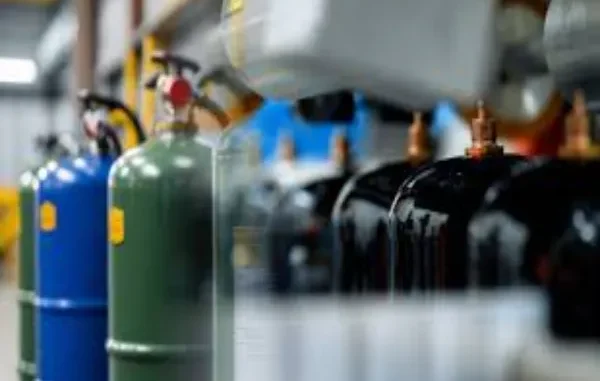
Why Safety Matters in Gas Cylinder Manufacturing
Gas cylinders may look simple, but they hold gases under extreme pressure. A failure could mean more than a broken part. It could cause explosions, chemical exposure, or dangerous projectiles. That kind of risk makes safety standards essential, not optional.
Manufacturers in the United States treat cylinder safety as a legal requirement and a professional duty. Strict standards apply from the design stage through the life of the cylinder. By the time a cylinder reaches a user, it has already been through an intense process of checks, tests, and reviews.
Regulatory Oversight in the United States
Cylinder production falls under several layers of regulation. The Department of Transportation (DOT) sets design and testing requirements because cylinders are often shipped across state lines and loaded into vehicles. OSHA focuses on protecting the workers who build, handle, and inspect cylinders.
Industry organizations also fill gaps. The Compressed Gas Association (CGA) publishes detailed guidelines that reflect decades of practical experience. A gas cylinder manufacturer often treats these guidelines as mandatory even though they are not federal law. This creates consistency across the industry, which helps protect both workers and end users.
Together, these rules form a safety net. They ensure that manufacturers cannot cut corners without consequences.
Material Selection and Testing
Everything starts with the material. A cylinder is only as safe as the alloy that makes up its walls. Steel and aluminum are the main choices, each with specific strengths. An aluminum cylinder manufacturer, for example, relies on alloys that resist corrosion and maintain strength even when exposed to temperature swings.
Raw material testing is an early checkpoint. Tensile tests measure how much stress the material can withstand before breaking. Impact tests evaluate how it reacts to sudden force. Metallurgical analysis checks grain structure and uniformity. Any flaws discovered at this stage prevent the material from advancing further.
This early testing protects against hidden weaknesses that might later cause a cylinder to rupture. Rejecting material at the start is far less costly than pulling unsafe cylinders out of circulation years later.
Design Standards
The DOT sets design codes that govern wall thickness, shape, and capacity. These are not broad guidelines. They are specific formulas that dictate how much stress a cylinder can handle and how it must be shaped to distribute pressure evenly.
Design approval requires documentation and often real-world prototypes. Regulators may request pressure test data before granting approval. If a manufacturer modifies the design, even slightly, it usually triggers a fresh review. This keeps every cylinder model consistent and safe.
Cylinder Forming and Fabrication
Once materials are cleared and designs are approved, fabrication begins. Aluminum cylinders are often made through extrusion or hot spinning, where a heated billet is forced into shape. Steel cylinders may be deep drawn, then welded to form a complete body.
Fabrication requires precision. Even a small variation in wall thickness can create a weak point. Automated machines help, but human inspectors confirm accuracy. Dimensional checks and visual inspections are repeated throughout the process. Welding also undergoes inspection since poor welds are one of the most common failure points.
At this stage, manufacturers combine advanced technology with skilled labor. Both are necessary to avoid defects that could go unnoticed until testing.
Heat Treatment
Forming and welding put stress on the metal. Heat treatment removes that stress and improves durability. Cylinders are heated to controlled temperatures and cooled according to strict procedures.
If the process is off by even a small margin, the cylinder’s strength can drop below the required level. For this reason, facilities monitor furnaces with calibrated sensors and keep detailed records. Every batch of cylinders has documentation showing the exact heat treatment cycle. These records are reviewed during audits to prove compliance.
Pressure Testing and Quality Control
Cylinders face their most critical tests after fabrication. Hydrostatic testing fills them with water and subjects them to pressures well above their rated limits. Water is used instead of gas because it is safer in case of rupture. If a cylinder expands permanently or leaks, it fails.
Burst testing is even harsher. A cylinder is pressurized until it explodes, and the pressure at which it bursts must meet or exceed regulatory minimums. This destructive test is performed on sample cylinders from each batch to confirm consistency.
In addition to pressure tests, nondestructive testing methods are used. Ultrasonic inspection sends sound waves through the metal to detect hidden flaws. Radiographic testing uses X-rays to check welds and wall thickness. Magnetic particle inspection highlights surface cracks that are not visible to the eye. These methods catch defects that could slip past visual inspection.
Every cylinder is also marked for traceability. Numbers, letters, and codes are stamped directly into the body, showing details such as test date, material, and capacity. If a defect ever appears in the field, these markings allow a quick recall of the affected batch.
Certifications and Audits
Proving compliance is as important as following the rules. Manufacturers undergo regular audits where inspectors review test records, production methods, and safety procedures. Audits may be scheduled or unannounced.
Certification ensures that a manufacturer can continue producing specific cylinder types. If problems are found, certification can be suspended until corrective steps are taken. Maintaining certification is not just a formality, it is the license to operate.
Worker Safety in Manufacturing
Cylinder safety starts with protecting workers. OSHA requires facilities to provide personal protective equipment, training, and emergency response plans. Workers who handle welding, heat treatment, or high-pressure testing face risks that must be managed daily.
Factories often set up multiple safety layers. Automated barriers surround high-pressure test stations. Ventilation systems prevent the buildup of gases. Alarms and emergency cutoffs are installed near heat treatment furnaces. These protections ensure that the process of making safe cylinders does not put workers in unnecessary danger.
Ongoing Inspection and Retesting
Once in circulation, cylinders do not stay unchecked. DOT rules require regular retesting, usually every five or ten years depending on the type. Hydrostatic and visual inspections confirm that the cylinder still meets safety standards.
Cylinders with damage, corrosion, or deformation must be removed from service. This rule ensures that age does not compromise safety. In fact, many cylinders remain in safe use for decades because of this system of recurring inspections.
Why Standards Benefit Everyone
Compliance with safety standards adds time and cost to production. But the benefits outweigh the burden. For users, standards guarantee reliable performance. For workers, they create a safe environment. For manufacturers, they bring consistency and reduce liability.
When every company follows the same rules, trust in the industry grows. Customers know they can rely on products from certified manufacturers, whether they buy steel or aluminum cylinders. The result is an industry built not just on production but on accountability.
In Conclusion
Gas cylinders serve critical roles in medicine, industry, food processing, and countless other fields. Their reliability depends on the rigorous standards behind their production. From raw materials to final inspection, every step is designed to eliminate risk.
An aluminum cylinder company or a steel producer cannot afford to overlook these requirements. The consequences of failure are too great. By following strict safety protocols, maintaining certifications, and committing to worker protection, manufacturers keep cylinders safe throughout their service life.
In this industry, safety is not an add-on. It is the foundation of trust between manufacturers, regulators, and users. That trust is what keeps operations running smoothly and people safe.
Leave a Reply