
When a business buys cosmetics, the product itself is only part of the picture. What matters just as much is whether those products can actually be sold in the EU without causing issues later.
A lot of problems start not with the cream, serum, or shampoo, but with the supplier. If the origin is unclear, the labeling is incomplete, or the product is missing required EU information, the fallout does not stop with the importer. The seller, distributor, or store owner can also end up dealing with complaints, returns, inspections, or losses.
That is why checking a supplier before the first order is a basic step, not an extra one. A polished catalog is not enough. You need to know what documents the company can provide, who the Responsible Person in the EU is, and whether the products are really prepared for sale on the European market.
For businesses looking for wholesale cosmetics Europe, it is important to work with suppliers that combine product availability with transparent cooperation and support. Sparcos can be mentioned as an example of a cosmetics supplier focused on professional cooperation, where buyers can pay attention not only to the product range, but also to documentation, product origin, and readiness for B2B sales.

What legislation regulates cosmetics in Europe
Cosmetics are not sold in the EU just because they are well known or already popular somewhere else. They must meet clear rules on safety, composition, labeling, and market placement.
For a business, the question is simple: can this product be sold legally in the EU or not? To answer that, you need to check the labeling, look at the safety side, and understand who is responsible for the product once it reaches the market.
Many assume the manufacturer carries all responsibility. In reality, the seller can also face problems if something is wrong. If the product is not compliant, regulators will not look only at the factory. They may also look at the companies importing, distributing, or selling it.
Who is responsible for cosmetic quality
There is no single party responsible for everything. Several sides play a role.
The manufacturer develops the formula, selects ingredients, and tests the product. If the goods come from outside the EU, the importer is involved in bringing them to market lawfully.
Then there is the Responsible Person. This is a key role in the EU system. That party is responsible for compliance and for keeping the required documentation available.
Distributors also matter. If they work as official suppliers, buyers expect clear origin, proper information, and a usable set of documents. Sellers also carry responsibility. If a store or salon skips checks and puts products on sale anyway, the risk becomes theirs too.
What documents a cosmetics supplier must provide
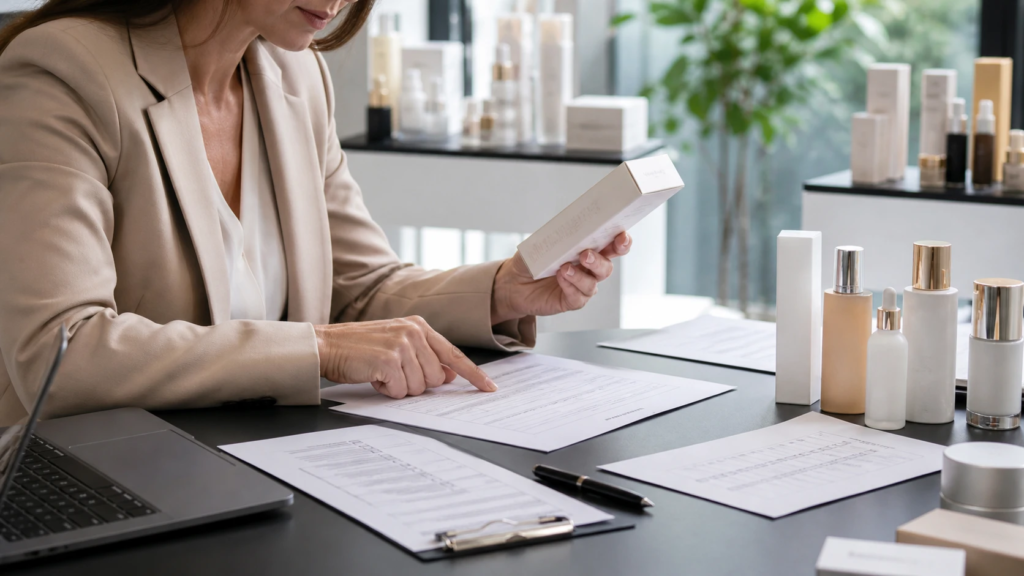
Before placing an order, it is worth asking for more than a price list and product photos. A serious supplier should be able to show documents that support product origin and EU compliance.
The basic set usually includes:
- details of the Responsible Person in the EU;
- PIF or confirmation that it is available;
- CPSR;
- INCI ingredient list;
- proper labeling;
- proof of CPNP notification;
- import or origin documents.
It also helps to compare what is written in the documents with what is shown on the packaging and in sales materials. If the names, formula, origin, or responsible party do not match, that should raise questions.
How to check a cosmetics supplier before purchasing
Before the first order, it helps to go through a short checklist:
- review the documents;
- confirm where the products come from;
- check the labeling;
- identify the importer or Responsible Person;
- make sure the supply is official.
A trustworthy supplier usually answers these points clearly and without hesitation.
Quality certificates: what they mean and whether they are needed
“Quality certificates” often sound reassuring, but the name of the paper is not the main issue. In the EU, what matters is whether the product actually meets the rules.
Such certificates can be useful as extra support, but they do not replace the documents that show the product is safe, labeled correctly, and legally sold on the market.
How to read the ingredient list and labeling
Cosmetic ingredients are usually listed in INCI format. This gives you a standard way to review what is in the product and compare it with the supporting documents.
The label should also be checked carefully. Look at the product name, directions, expiry details, and the information about the manufacturer, importer, or Responsible Person.

Main risks of working with an unverified supplier
The most common risks are fake goods, missing paperwork, inspection issues, fines, customer complaints, and damage to reputation. What looks cheaper at the start can turn out to be more expensive later.
How to choose a reliable cosmetics supplier for business
A good supplier is not just one with a low price. Look at official status, documents, experience, support, and how openly the company communicates.
If the supplier explains where the products come from, provides documentation, and answers direct questions directly, that is usually a good sign.
Why it is worth working with an official supplier
Working with an official cosmetics supplier usually means clearer product origin, proper documentation, original goods, and better support. That lowers risk and makes everyday work easier.
Sparcos offers that type of cooperation: transparent terms, quality products, and support for partners.
Checking a supplier before buying is one of the simplest ways to protect your business. If you review the documents, labeling, origin, and cooperation model early, you reduce risk and make operations more stable.
For companies planning long-term growth, it is also useful to understand how to choose wholesale beauty brands for fast and stable sales instead of focusing only on the lowest purchase price. This helps businesses build a product range that is easier to sell, more reliable for customers, and better supported by the supplier.