
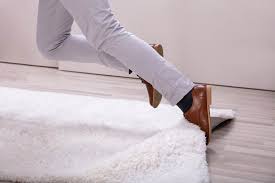
Loose carpeting doesn’t always look dangerous at first glance. A raised edge near a doorway or a small wrinkle in a hallway carpet can seem more like a cosmetic issue than a serious hazard. Yet, these problems are responsible for thousands of preventable injuries every year, and they’re particularly prevalent in homes, hotels, apartment buildings, office spaces, and retail stores.
Trips and falls happen quickly. One missed step on a lifted carpet seam can send someone to the floor before they know what happened. The consequences can be severe for young kids, older adults, and people with mobility limitations.
Broken wrists. Knee damage. Back problems and head injuries. All these are commonly linked to flooring-related falls.
What makes loose carpeting particularly concerning is that many of these incidents are avoidable with proper maintenance and timely repairs.
Why Loose Carpeting Creates a Serious Safety Risk
Over time, carpet wears down naturally. From poor installation and aging adhesives to moisture and shifting padding, there are many reasons why sections of carpet can loosen or buckle. Heavy foot traffic never helps. Once any of these happens, the flooring no longer lies flat against the surface underneath it.
That’s where the risk starts.
Even a small raised area can catch a cane, walker, wheelchair, or the toe of a shoe. Staircases and hallways are particularly dangerous because people tend to move quickly through them without watching all their steps. A person carrying groceries or looking at their phone might not notice the uneven surface until it’s too late. Just turning a corner can be a risk.
The danger is even greater in dimly lit areas. Loose carpeting near stairwells, elevators, or entrances might blend into the floor, making the hazard difficult to spot. Patterned carpeting in commercial buildings sometimes entirely hides folds or bumps.
Falls are rarely minor affairs. A sudden trip can throw the body forward with significant force.
People often instinctively try to catch themselves, but that leads ot wrist fractures, torn ligaments, or shoulder injuries. Others land right on their backs, hips, or heads.
Depending on the severity of the injury, recovery can take weeks or months. Some injuries never completely heal.
The Long-Term Impact of Trip-and-Fall Injuries
Some people recover from their falls with only soreness and bruises. Others face medical complications that disrupt every aspect of their daily lives.
Head injuries are among the most serious outcomes tied to falls resulting from loose carpeting. Even what appears to be a minor blow to the head can result in dizziness, headaches, concussions, or memory problems. Older adults are particularly vulnerable to complications after hitting their heads during a fall.
Hip fractures are another significant problem. These injuries frequently require surgery and extensive rehabilitation, especially for seniors. In some circumstances, people never regain the same level of mobility they had before their accident.
Back and spinal injuries can also develop after a hard fall. Long after visible bruises fade, herniated discs, chronic pain, and nerve damage can continue. Someone who once cared for family members independently or worked full-time might suddenly struggle with the most basic physical tasks.
These incidents also have an emotional aspect.
After a serious fall, many people are anxious about using stairs or walking in public places. Fear of falling again can limit independence and reduce confidence. This is particularly pronounced among older adults. That psychological impact is easy to overlook, but it still matters.
From medical bills and missed work to physical therapy and ongoing treatment, injured individuals and their families have plenty of stress to manage. In some cases, people speak with a premises liability lawyer to better understand whether negligent property maintenance contributed to the accident. If you child was seriously injured due to loose carpeting in someone else’s home or property, contact an attorney to obtain help for child injury victims.
Common Places Where Carpet-Related Injuries Occur
Loose carpeting can turn into a hazard nearly anywhere. That said, some environments pose higher risks due to the level of foot traffic.
Apartment complexes are common examples. Shared staircases and hallways are subject to constant use; carpeting in these spaces usually deteriorates faster than expected. If repairs are delayed or ignored, visitors and tenants might face heightened risks of falling.
Hotels and office buildings are also sites of many slip-and-fall accidents resulting from damaged flooring. Travelers unfamiliar with a property might not notice uneven carpeting in corridors or guest rooms, particularly when walking at night or carrying luggage. Employees in professional environments tend to move quickly between tasks, shifts, or meetings and might not see problems until after a fall occurs. Carpet seams can separate over time in busy areas, creating tripping hazards near reception areas, conference rooms, and entrances.
Retail stores might have higher risks than anywhere else. Heavy inventory and rolling carts are immediately problematic, but the combination of continual employee and customer traffic constantly straining carpeted surfaces doesn’t help
What these places all have in common is how ordinary they all are.
People expect the floors they walk on to be safe. When they’re not, injuries happen without warning.
Property maintenance matters.
Loose carpeting rarely turns hazardous overnight. Most flooring problems develop gradually over time. That means they can sneak up on people, but there’s also time to address them before somebody gets hurt.
Regular inspections and proper installation make a greater difference than many property owners, business managers, and landlords realize. Areas with heavy traffic need durable flooring solutions and ongoing upkeep. Staircases need special attention.
Preventable Hazards Shouldn’t Be Ignored
Loose carpeting can seem minor compared to other potential property hazards. That said, the injuries connected to it can be life-changing. A single trip can result in lost income, chronic pain, surgeries, and permanent mobility issues.
What’s really frustrating is how many of these accidents are preventable.
Curled edges, uneven carpet seams, and worn flooring are typically visible warning signs long before anyone gets injured. It’s when maintenance is delayed or safety concerns are overlooked that ordinary spaces can quickly become dangerous.
People walk across carpeting on a daily basis. They usually do it without thinking twice. That’s because they should be able to.