
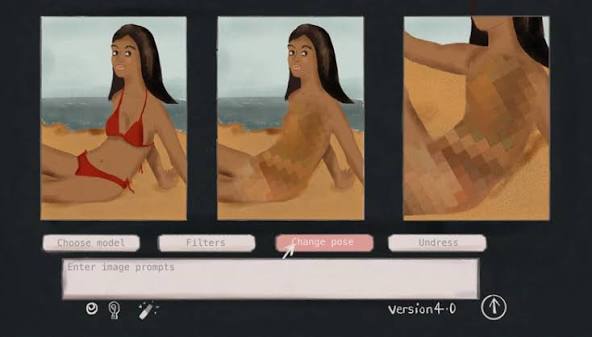
Nude AI generators are no longer just tools for turning a prompt into a single image. In 2026, many platforms are adding reference-based generation, editing, reusable characters, and image-to-video workflows.
That changes what matters when comparing them. A generator can produce a sharp, realistic image and still struggle to keep the same face across several scenes. Another may offer video but only basic motion. Some services are building connected workflows, while others remain focused on doing one part of the process well.
Reference Images Are Changing How Generators Are Used
Text-to-image is still the starting point for many platforms, but prompts alone give the model considerable freedom. Even when the same description is reused, facial structure, proportions, pose, and smaller details can change between generations.
Reference-based generation reduces some of that randomness. Instead of describing the same character from scratch, users can start with an existing image and ask the model to preserve particular visual traits while changing the scene, pose, or style.
One platform may treat every prompt as a fresh generation. Another may let a user create a character once, reuse it in several scenes, edit selected areas, and then use one of those images as the starting point for a video.
Editing tools matter for the same reason. Regenerating a selected area, adjusting a pose, upscaling an image, or reusing an output as a new reference can be more efficient than discarding an otherwise good result and starting again.
The advantage is not simply better-looking images. It is having more control over what changes and what stays the same.
Image-to-Video Exposes Bigger Differences Between Platforms
Video makes weaknesses much harder to hide.
A still image only has to work for one frame. Video has to preserve a recognizable subject and coherent scene while introducing movement across many frames.
Two tools can both claim image-to-video support while offering completely different levels of motion control and character stability. Some mainly animate an existing image with simple movement. Others use dedicated video-generation modes that can produce more complex changes.
Identity preservation is one of the clearest dividing lines. A face may look convincing in the source image and then change once the character starts moving. Hair, hands, clothing, and background elements can also distort or shift between frames.
Side-by-side comparisons make those differences easier to see. In AffDays’ comparison of nude AI generators, some tools remain focused mainly on still images, while others combine generation with editing, reusable characters, and video. The useful distinction is not whether a platform has a video button, but what that feature can actually do and how well it connects with the rest of the workflow.
Video can also change the real cost of a platform. A few image generations may consume little of a credit balance, while short clips can use considerably more.
More Features Do Not Always Mean Better Results
The move toward all-in-one platforms makes feature counts a poor shortcut for judging quality.
A service can offer image generation, editing, characters, chat, and video while still being weaker at its core generation task than a narrower competitor. A tool that does two things well can be more useful than one that offers ten mediocre features.
For some users, integration is the advantage. Creating an image, correcting it, and turning it into a video without switching services makes the process faster. Others may prefer a more specialized generator if it offers stronger prompt adherence or more predictable outputs.
The same applies to pricing. A large credit allowance offers little value if much of it is spent rerolling inconsistent results.
The New Quality Test Is Consistency
Resolution still matters, but a polished single image tells only part of the story.
A stronger test is how reliably the platform performs across repeated outputs. Does it follow the prompt when the scene changes? Does a reference image continue to influence the details that matter? Does anatomy remain stable without repeated rerolls?
Reusable characters make these differences particularly visible. If the face or other defining features change noticeably from scene to scene, high resolution does little to solve the underlying problem.
Video raises the bar again. Small mistakes that might go unnoticed in a still image become obvious when an element flickers, stretches, disappears, or changes between frames.
This is also why polished homepage examples have limited value. They show what a model can produce at its best, not how reliably an ordinary user can reproduce a similar result.
Conclusion
Nude AI generators are developing into more complex creative tools, but broader feature sets do not make every platform equally capable.
The important question is shifting from how detailed one image can be to how much of the result a user can deliberately keep, change, and reuse across images and video.