
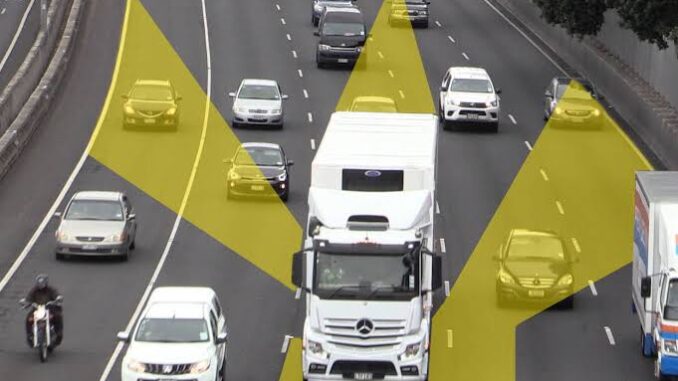
Sharing the road with commercial trucks poses several significant challenges that are mostly linked to the high demands of the trucking industry, along with the hazards that a massive, heavy vehicle can pose for operators and general drivers on public roads. Being aware that a large commercial truck will have longer stopping distances and require wider turns helps you stay safer as you drive.
You’ll also want to note that collisions between smaller vehicles and large commercial trucks can often be severe. Following these types of collisions, survivors often face catastrophic injuries that can have lifelong effects. Since commercial trucks won’t be getting their own roads anytime soon, it helps to know how to safely share the space. Having a clear roadmap to follow if the worst should happen also helps you figure out how to move forward after a significant truck accident.
Understanding the Operational Hazards of Commercial Trucks
Commercial trucks are noticeably large, which creates visual and operational challenges. For instance, commercial trucks have larger blind spots compared to traditional passenger vehicles. These blind spots can also occur along the front and back of the truck, compared to most people having just the sides of passenger vehicles to watch out for.
As a general rule, it’s best to assume that a truck driver cannot see you if the driver’s face is not visible in the side mirror. Although many commercial trucking companies are adding cameras to their fleets, you cannot always tell when the driver has access to them. Always use the best driving practices for maintaining a safe distance from commercial trucks in case they veer into your lane when you are in a blind spot.
Commercial trucks also make wide right turns. On narrower roads, a truck with a long trailer will often need to swing to the left to make the turn. While the commercial truck driver must still make sure the area is clear for them to make this maneuver, it is possible for their blind spot or distractions to cause them to miss seeing your vehicle. Alternatively, failing to properly execute a turn could cause the truck to either make an abrupt stop or potentially hit other vehicles with the trailer.
A fully loaded commercial truck is also extremely heavy, which generates enough momentum that it is hard for it to stop quickly. Depending on the size of the truck, you can expect it to require almost twice the stopping distance your passenger vehicle needs.
Commercial truck drivers are trained to accommodate this longer stopping time by maintaining proper distances from other cars. But, poor driving habits, major traffic and other issues can cause longer stopping times to contribute to serious accidents. If the truck has bad brakes, then a driver could still cause a collision when they think they’ve left enough space to stop.
Being Aware of Truck Driver Fatigue and Distractions
Some of the challenges that come with sharing the road with commercial trucks are linked to driver behavior. Today, there are regulations regarding the trucking industry that limit how long a driver can operate their vehicle. But, that doesn’t mean that every company follows the law. Drivers may also still be fatigued from driving for their allotted amount of hours, especially if they don’t get enough sleep before they get behind the wheel.
Truck drivers can also experience distractions, just like passenger vehicle drivers. But, they have more reasons why they might feel justified in looking at a screen. If a truck driver gets off-route or needs to change their route to avoid closed roads or other hazards, then they might attempt to do so while the truck is moving.
A driver might also be tempted to snack as they drive to avoid pulling off the road for lunch. Or, they might get into a heated conversation with a partner driver. Although commercial truck drivers are expected to keep their attention on driving, it’s possible that a combination of factors could cause them to miss changing conditions on the road at the worst possible time.
Facing Potentially Catastrophic Injuries and Property Damage
In a collision between a commercial truck and a passenger vehicle, it is pretty clear which one was at a disadvantage. Sadly, general passenger vehicles simply cannot withstand the forces created by a large truck that could be traveling at highway speeds.
Following a collision with a commercial truck, many passengers in a normal-sized vehicle can face severe injuries that include lacerations, amputations and trauma to the brain. In many of these cases, you could face a lengthy recovery that dramatically alters your ability to work, care for your family and enjoy your favorite activities.
Navigating Legal and Liability Challenges After an Accident
Experiencing an accident that involves a commercial truck often opens up legal challenges that you might not face with a typical collision between two smaller personal vehicles. For example, there could be multiple parties that are liable for the accident. While a truck driver is expected to drive safely, there could be an issue with the commercial truck that should have been fixed before it was allowed on the road.
Or, a recently repaired commercial truck might still have faulty brakes due to improper installation techniques or a manufacturing defect. Too often, a trucking company will try to shift the blame to another party. While this might be justified, it can cause lengthy delays and complications in a personal injury case. Working with a qualified truck accident lawyer like the attorneys at Thomas Law Offices can help you navigate legal challenges that you face on the road to recovery.
In a world where people demand fast access to their favorite products, you can expect to see more commercial trucks sharing your public roads. But that doesn’t mean that everyone must accept seeing an uptick in accidents. Nor should a truck driver or company be able to avoid taking responsibility for their actions that lead to serious accidents.
Stay safe by always keeping a close eye on trucks that share the road with you. But, you’ll also want to keep in mind that help is available if you experience an accident. By holding trucking companies responsible for maintaining safe fleets and training operators to follow essential safety protocols, everyone can do their part to make the roads safer for all types of drivers.