
A customer buying concert tickets, booking a consultation, or replacing a broken appliance doesn’t care how many systems sit behind the screen. They care that the page loads, the price is clear, the form makes sense, and the confirmation arrives before doubt creeps in.
The trouble starts when the journey feels stitched together by teams that never talked. A social ad says one thing, the landing page says another, checkout asks for the same details twice, and support has no record of what happened.
Start With the Path People Actually Take
A neat funnel looks good in a meeting, but real customers wander. They compare prices, leave tabs open, read reviews, ask a friend, come back from a phone, and forget why they clicked in the first place.
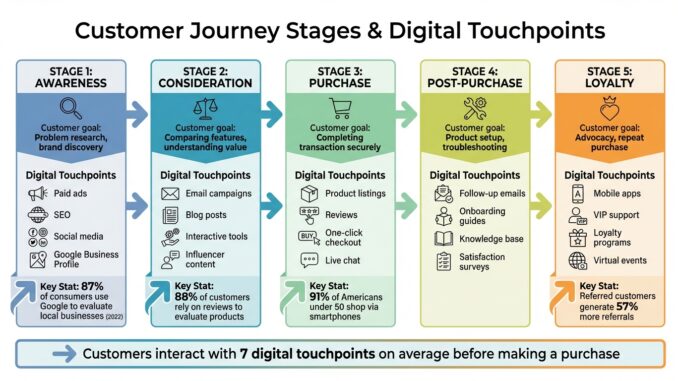
Mapping that behavior means thinking about what people are trying to do, not only what the business wants them to do. Planning content around customer questions and tasks is why customer journey mapping can guide better content choices instead of becoming another pretty worksheet.
A digital strategy masters connects this kind of planning with analytics, communication, platform choices, and customer behavior, which all have to line up before a digital experience feels easy.
Keep the Handoffs From Showing
Customers notice the seams when teams pass the work badly. Marketing gets the click, sales wants the lead, support handles the question, and operations deals with the delay. If the handoff is messy, the customer ends up doing the explaining.
Before the click: The promise should match what the page actually offers, including price, timing, product details, and the next action.
During the action: Forms should ask for only what is needed, save progress where possible, and make errors easy to fix.
After the action: Emails, receipts, updates, and support notes should tell the same story so the customer does not have to repeat every detail later.
A customer who just filled out a form should not have to type the same information into a chat box ten minutes later. That kind of repeat work makes the brand feel disorganized, even if every individual team is doing its own job.
Use Data to Find the Annoying Parts
Analytics can point to trouble, but the numbers need interpretation. A page with heavy traffic and few conversions might have unclear pricing, slow load time, weak copy, or a call to action buried too far down.
Good teams look for patterns across several places. Search terms can show what people expected to find. Chat transcripts can show where language is confusing. Checkout exits can reveal where trust drops. Repeat complaints can point to a promise the brand keeps making but not meeting.
Journey maps that include successful and unsuccessful customer touchpoints help teams see where people quietly give up instead of waiting for a loud complaint.
Write for the Moment
A homepage should orient. A product page should answer doubts. A payment screen should remove friction. An error message should help someone recover without feeling foolish.
The copy does not need to be clever everywhere. Sometimes the most useful sentence is the one that says what happens next. If a customer books an appointment, tell them when they’ll hear back, what to bring, and how to change the time.
Keep Fixing After Launch
A digital journey is not finished when the site goes live. Products change, search behavior changes, customers ask new questions, and old forms start to feel clunky.
The best planning leaves room for review. Look at where people stall, what they ask support, and which promises create confusion. A journey feels smooth to the customer when every click, message, and handoff has been checked by someone who cares whether the next step makes sense.