
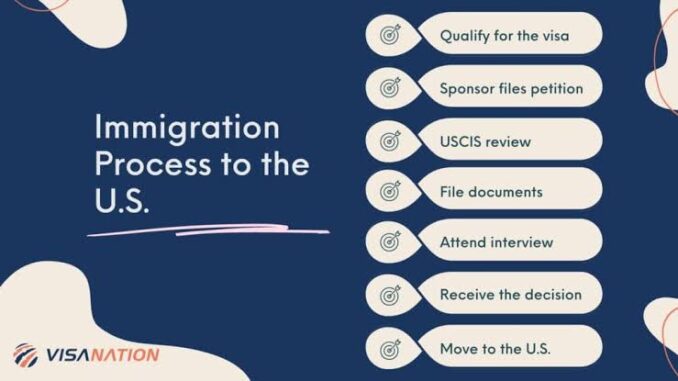
Family-based immigration allows United States citizens and lawful permanent residents to petition for certain relatives. Although the process can help families build their lives together in the United States, approval is not automatic. Each applicant must qualify under a specific immigration category and provide documentation supporting the petition.
The process may involve multiple government agencies, filing fees, financial sponsorship requirements, medical examinations, background checks, and an interview. Families can prepare by understanding the major stages, organizing their records, and addressing possible complications before submitting an application.
Identify the Correct Immigration Category
The first step is determining which family-based category applies. The available category depends on the relationship between the petitioner and the person seeking immigration status.
United States citizens may be able to petition for spouses, children, parents, and siblings. Lawful permanent residents may petition for certain spouses and unmarried children. However, eligibility rules and waiting periods vary.
Some relatives are considered immediate relatives of United States citizens, while others fall within family-preference categories. Preference categories are generally subject to annual visa limits, which means an approved petition may not immediately result in an available immigrant visa.
Families should understand the applicable category before filing because submitting the wrong petition or misunderstanding visa availability can lead to delays and unnecessary expenses.
Understand the Petitioner’s Responsibilities
The petitioner begins the process by establishing a qualifying family relationship. This typically requires documentation proving the petitioner’s citizenship or permanent resident status and evidence demonstrating the relationship to the beneficiary.
Depending on the case, evidence may include birth certificates, marriage certificates, adoption records, divorce decrees, passports, naturalization certificates, or permanent resident cards.
The petitioner must provide accurate information about previous marriages, children, addresses, and immigration filings. A missing relationship or inconsistent date could raise questions later in the process.
Families with unusual circumstances, limited documentation, or complicated immigration histories may benefit from consulting a Houston immigration attorney before submitting their petition.
Gather Civil Documents Early
Obtaining civil records can take time, particularly when documents must be requested from another country. Families should begin collecting birth certificates, marriage records, divorce judgments, adoption documents, police certificates, and military records as early as possible.
Names and dates should be reviewed carefully. Differences may occur because of translation practices, naming traditions, clerical errors, or changes made throughout a person’s life.
A name might appear differently on a passport, birth certificate, marriage record, and previous visa application. These differences should not be ignored. The applicant may need additional documentation or a written explanation connecting the records.
Documents written in another language may also require a complete English translation accompanied by the appropriate certification.
Prepare Financial Sponsorship Documents
Many family-based immigration cases require a financial sponsor. The sponsor may need to demonstrate sufficient income or assets and accept specific financial responsibilities connected with the intending immigrant.
Tax returns, tax transcripts, employment verification, recent pay statements, and evidence of assets may be relevant. When the primary petitioner does not meet the financial requirements alone, a qualifying joint sponsor may sometimes be used.
Financial evidence should be current, complete, and consistent. A sponsor who recently changed jobs, became self-employed, or experienced a significant change in income may need to provide additional documentation.
Families should not wait until the end of the case to consider sponsorship. Identifying a potential financial issue early provides more time to gather evidence or evaluate whether a joint sponsor may be necessary.
Document a Genuine Marriage
Marriage-based immigration cases require more than a valid marriage certificate. The couple must generally establish that the marriage was entered into in good faith and not primarily to obtain an immigration benefit.
Relevant evidence can include joint leases, mortgage records, shared bank accounts, insurance policies, utility bills, tax documents, travel records, photographs, correspondence, and evidence of time spent with each other’s families.
The strongest evidence depends on how the couple lives. Newly married couples may not yet have years of joint financial records, while couples living in different countries may rely more heavily on travel records and communication history.
The goal is not to create a perfect-looking relationship. The evidence should accurately show how the couple met, how the relationship developed, and how they have combined or maintained their lives.
A Houston family immigration attorney can help a couple identify useful evidence and prepare for the stages of a marriage-based case.
Review Previous Immigration History
Applicants should review every previous interaction they have had with United States immigration authorities. This may include visa applications, border entries, extensions, employment authorization requests, asylum applications, prior family petitions, removal proceedings, or denied benefits.
Information submitted in a new application may be compared with prior government records. An applicant who gives a different address, employment date, marital history, or reason for travel may be asked to explain the inconsistency.
Previous immigration violations should be evaluated before filing. Visa overstays, unauthorized employment, unlawful presence, misrepresentation, and prior removal orders can affect eligibility or the appropriate application process.
Families should avoid assuming that an old issue no longer matters simply because several years have passed.
Respond Carefully to Government Notices
After filing, the government may issue a receipt notice, biometrics appointment, interview notice, request for evidence, or other correspondence.
Every notice should be opened immediately and reviewed in full. Families should record deadlines and appointment dates in more than one place. Address changes should be reported through the appropriate government procedures so important notices are not sent to an old residence.
A Request for Evidence means the government needs more information before deciding the case. The response should address every issue raised in the notice and include organized supporting documentation.
Submitting unrelated records or resending the original application without an explanation may not resolve the government’s concerns.
Prepare for the Immigration Interview
Not every case follows the same interview process, but applicants should be prepared to discuss their forms, background, relationship, and supporting evidence.
Before the appointment, families should review copies of everything submitted. They should identify any information that has changed since filing, including a new address, job, child, international trip, or marital development.
Applicants should answer questions truthfully and directly. Guessing can create inconsistencies. If someone does not remember an exact date or does not understand a question, it is better to say so than to invent an answer.
Original documents and any updated evidence requested in the interview notice should be brought to the appointment.
Avoid Guarantees and Unqualified Advice
No legitimate professional can guarantee that an immigration application will be approved. Decisions are made by government authorities after reviewing the applicable law, forms, evidence, background checks, and testimony.
Families should be cautious of anyone who promises a particular result, encourages them to submit false information, or asks them to sign blank forms. Applicants should understand what is being filed in their names and retain copies of every submission.
Legal advice should come from a licensed attorney or another professional authorized to provide immigration legal services.
Begin With Careful Preparation
Family-based immigration can be an important step toward creating stability and keeping loved ones together. It can also become stressful when families encounter unfamiliar procedures, missing records, long waiting periods, or unresolved immigration issues.
Early preparation gives families time to select the correct process, collect civil documents, address sponsorship requirements, review previous immigration history, and prepare consistent evidence.
Every family’s circumstances are different. Understanding the process and obtaining qualified guidance when needed can help applicants avoid preventable mistakes and move forward with greater confidence.